
Step-by-Step Guide to Industrial Air Compressor Rentals for Short-Term Demand and Emergency Backup
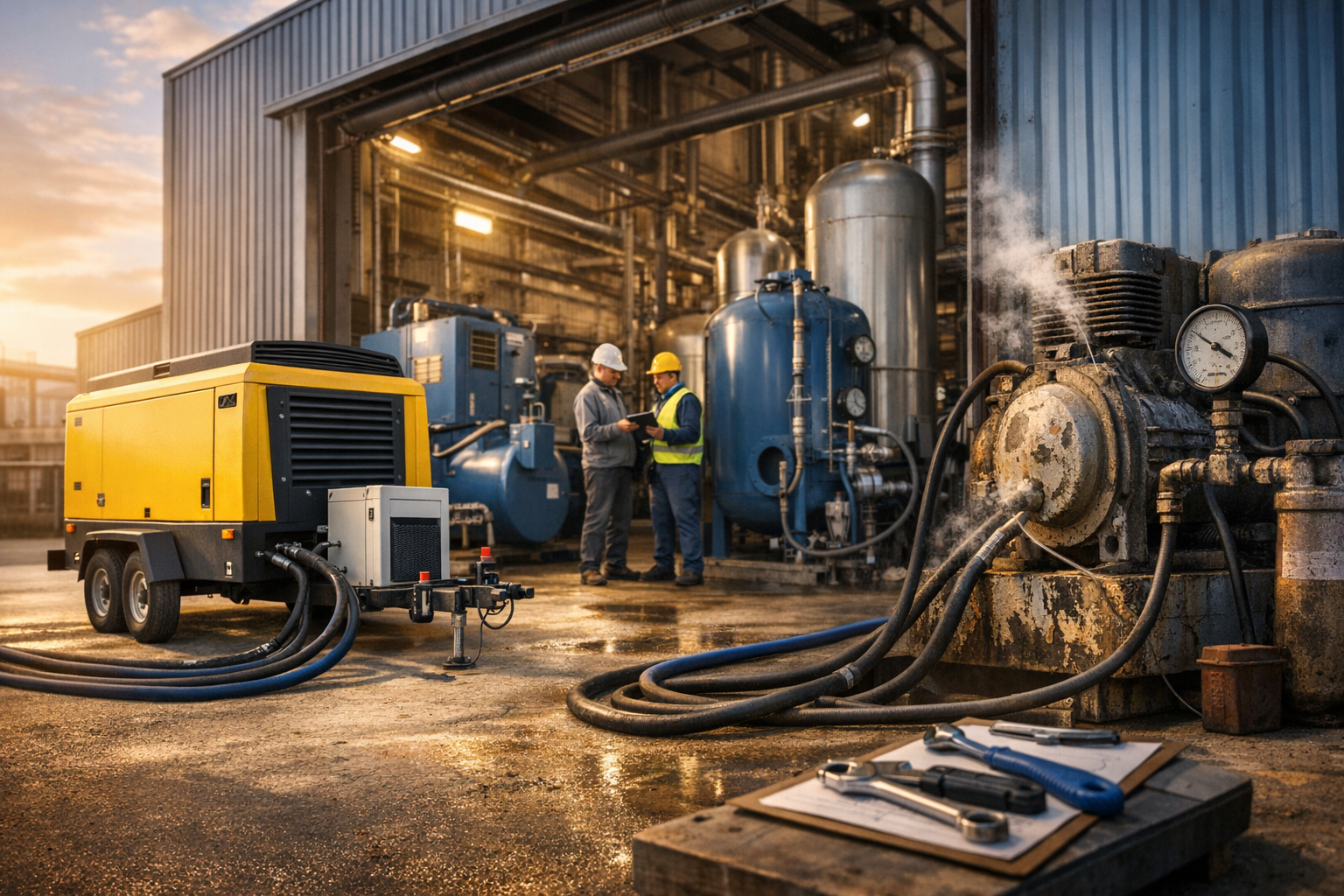
When compressed air is part of your production process, you do not have much room for guesswork. A compressor issue can slow down packaging, stop a line, throw off plant pressure, or create a ripple effect across maintenance, quality, and throughput. That is why short-term air compressor rentals can be a smart move when demand spikes, equipment is down, or you need backup capacity you can trust.
For plant managers and maintenance leaders, the goal is simple. Keep operations moving, protect production, and avoid paying for more equipment than you need year round. Rental compressors give you flexibility without locking you into a permanent capital expense. Used the right way, they can help you handle planned shutdowns, emergency failures, seasonal volume changes, and long lead times on permanent equipment.
When a rental compressor makes sense
There are a few common situations where a rental is often the best answer.
Your main compressor is down and production cannot wait
Demand has increased and your current system is running at full capacity
You are planning maintenance or a plant shutdown and need temporary air support
You are commissioning new equipment and need a short-term supply
You want backup coverage for critical operations
You are dealing with a compressed air leak, system inefficiency, or pressure drop and need time to fix the root problem
A rental is not just about getting air back online fast. It is about buying time to make the right long-term decision without putting production at risk.
Step 1: Define the problem clearly
Before you call for a rental, get specific about what you need. Do not just say you need a compressor. Know the pressure, airflow, duty cycle, and the type of air your process requires.
Start with these questions:
What pressure do we need at the point of use
How much airflow does the process require in cubic feet per minute
Is the air demand steady or does it cycle up and down
Do we need oil-free air or is lubricated air acceptable
Will the unit run indoors or outdoors
Do we have proper electrical power or do we need a diesel driven unit
The more accurate your information, the easier it is to match the right rental to the job. That saves time, avoids under sizing, and prevents wasting money on a unit that is larger than necessary.
Step 2: Check the rest of the system, not just the compressor
A compressor rental solves one part of the problem, but the rest of the compressed air system still matters. If your piping, filters, dryers, and receivers are in poor shape, a rental may not perform the way you expect.
Look at the complete air path:
Air lines and piping condition
Filters and separators
Air dryers and moisture control
Receivers and storage capacity
Leaks at valves, fittings, hose connections, and quick couplers
Pressure drops across the system
It is common to bring in a rental and still see weak performance because the real problem is system inefficiency. In many plants, a temporary compressor exposes issues that have been building for months. That is not a failure of the rental. It is useful information.
Step 3: Choose the right type of rental unit
Not every rental compressor fits every facility. The best choice depends on your process and site conditions.
For many industrial users, the decision comes down to whether the application needs a portable unit, a stationary unit, or a high pressure solution. Some facilities need a compact electric compressor. Others need a towable diesel package that can be placed outside the building and connected quickly. If your operation has strict air quality requirements, oil free options may be necessary.
In some cases, it also makes sense to pair the rental with dryers, filters, or storage tanks. That is especially true in food processing, packaging, and other environments where moisture or contamination can create real production problems.
If you already rely on a brand like Ingersoll Rand in your plant, staying close to proven equipment standards can make integration easier. The goal is not brand loyalty for its own sake. The goal is compatibility, reliability, and quick startup.
Step 4: Plan for installation and startup
Speed matters, but so does setup. A rental compressor should not create a new headache on top of the old one.
Before delivery, make sure your team has a clear plan for:
Placement and access
Power or fuel supply
Connection to existing air headers
Drain management
Ventilation and noise considerations
Controls and monitoring
If the rental is standing in for failed equipment, the changeover should be coordinated so production does not lose more time than necessary. A good compressed air service near me provider will help with layout, hookup, and start up so the unit performs properly from day one.
Step 5: Use the rental to protect production and gather data
A rental is temporary, but it can do more than keep the line moving. It can also give your team a chance to understand what is really happening in the plant.
Watch pressure stability during peak demand. Monitor energy use. Track whether the rental is running constantly or cycling more than expected. If a smaller rental can carry the load more efficiently than your permanent setup, that may point to deeper issues with system control, air leaks, or excessive demand from old equipment.
This is also the right time to review maintenance habits. If your existing compressor failed because of poor filtration, lack of oil changes, overheating, or neglected service intervals, the rental gives you breathing room to correct the root cause before the next failure.
For operations that also depend on industrial pumps, this same approach applies. If a pump issue is affecting production support systems, finding industrial pump service near me can help you avoid a second outage while you stabilize the plant.
Step 6: Use emergency backup planning before the emergency hits
The worst time to shop for a rental is after your compressor goes down on a Friday afternoon and the line is already behind schedule. The better approach is to build a backup plan before you need it.
That means knowing the rental provider you would call, what size unit your plant needs, where it would be placed, and how quickly it could be delivered to Memphis, TN, Jackson, TN, Tupelo, MS, Little Rock, AR, or Springdale, AR. If you have a nearby service partner lined up, your response time drops dramatically.
It also means keeping your own records up to date. Make sure you have compressor model numbers, system drawings, air demand estimates, and service history ready to share. That makes it much easier to get a fast, accurate recommendation when the pressure is on.
If your team has ever searched for air compressor repair near me during a shutdown, you already know how much time gets lost when there is no plan. Rentals are most effective when they are part of a broader maintenance strategy, not just a reaction to a failure.
Real world example from the plant floor
Consider a food processing facility in the Memphis area running a packed production schedule ahead of a major shipping window. One of the main compressors starts losing pressure and the backup unit is not enough to support peak loads. Rather than stop the line, the maintenance manager brings in a rental compressor to handle the demand while the plant repairs the permanent system.
The rental keeps packaging equipment running, but it also reveals a larger issue. The system had several leaks, a fouled dryer, and a receiver that was undersized for the line surge. With the rental in place, the team can fix the compressor, tighten up the distribution system, and correct the efficiency problem without sacrificing production. The result is less downtime, better reliability, and lower operating cost once the rental leaves.
That same approach works in a distribution center, automotive supplier, or wood products facility where compressed air supports tools, automation, or material handling. A short-term rental can protect shipments, keep customer orders on track, and buy time for smarter repairs.
Actionable takeaways
If you are considering a rental compressor, keep these points in mind.
Define your pressure and flow needs before you call
Look at the entire compressed air system, not only the compressor
Choose the right type of unit for your process and site conditions
Plan the hookup, power, and controls ahead of time
Use the rental period to identify leaks, inefficiency, and maintenance gaps
Build a backup plan before production is on the line
Work with a service partner that can respond quickly in your region
The plants that handle compressor issues best are usually the ones that prepare early. They know their system, keep service records organized, and have a trusted rental path ready when demand spikes or equipment fails.
Bottom Line
Industrial air compressor rentals are not just a temporary fix. They are a practical tool for protecting uptime, reducing disruption, and managing compressed air needs without taking on unnecessary capital expense. When the right rental is matched to the job, it can keep your operation stable during emergencies, support short-term growth, and give your team the time needed to repair the real problem.
If your plant is facing a pressure drop, a compressor outage, or a temporary surge in demand, the best move is to act fast and make the system whole again. That protects production today and helps you build a more reliable operation tomorrow.
Process & Power
1721 Corporate Avenue • Memphis, TN 38132
Serving Memphis, TN • Jackson, TN • Tupelo, MS • Little Rock, AR • Springdale, AR
(901) 362-5500
