
HydroThrift Cooling Systems
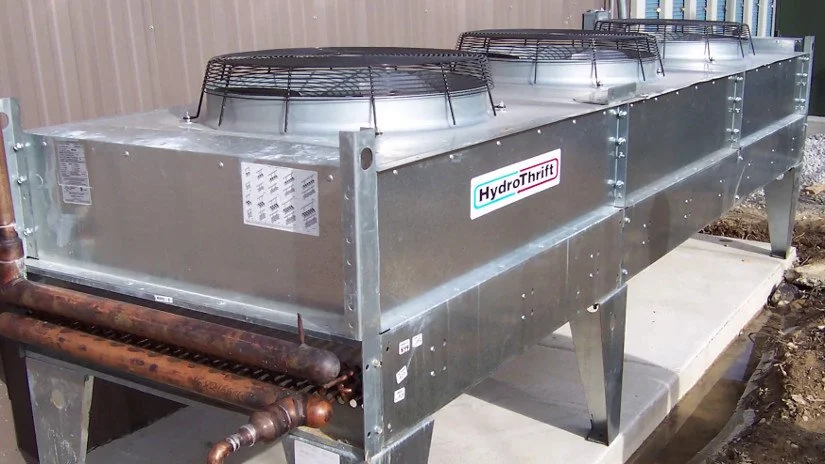
At Process & Power, we proudly offer HydroThrift, a U.S.-based manufacturer specializing in industrial cooling systems and heat transfer solutions. With over 50 years of engineering expertise, HydroThrift designs and builds systems that provide reliable temperature control for industrial processes, power generation, chemical plants, and more. Their products are known for durability, efficiency, and custom engineering tailored to demanding applications.
Product Highlights
Closed-Loop Cooling Systems – Complete skid-mounted systems designed for continuous duty operation.
Air-Cooled Heat Exchangers – Low-maintenance, energy-efficient solutions for industrial cooling.
Water-Cooled Heat Exchangers – Reliable heat transfer for high-performance process and power applications.
Pump & Control Packages – Integrated systems for simplified installation and operation.
Custom-Engineered Solutions – Purpose-built cooling and heat transfer systems for unique industrial needs.
Why Choose HydroThrift?
Over five decades of experience in industrial cooling and heat transfer
Rugged, American-made designs built for long service life
Flexible, custom systems engineered to meet specific process requirements
Contact Process & Power for HydroThrift Cooling Systems
Located at: 1721 Corporate Avenue • Memphis, TN 38132
Call us at: (901) 362-5500
Contact Us
Hydro-Thrift Cooling Systems FAQ
What Hydro-Thrift equipment is featured?
This page focuses on industrial cooling and heat transfer, including closed-loop systems, air- and water-cooled exchangers, and integrated pump-and-control packages.
What is a closed-loop cooling system?
It recirculates a working fluid through the process and heat-rejection equipment. Heat must still be transferred to another medium or the surrounding environment.
How do air-cooled and water-cooled arrangements differ?
One rejects heat to air and the other to a water circuit. Ambient conditions, water availability, temperature targets, and maintenance needs influence the choice.
Can a closed loop reduce use of once-through cooling water?
It may reduce consumption when it replaces an appropriate once-through arrangement. Actual use depends on how the system rejects heat and the site design.
Will a dry air-cooled exchanger cool below outdoor air temperature?
It is limited by the available temperature difference. Applications requiring lower temperatures need evaluation of a different cooling method or supplemental equipment.
What should be included in an engineered cooling package quote?
Define heat duty, fluid circuit, pumps, controls, heat-rejection equipment, and required connections. Include standby needs and the site's worst expected operating conditions.
How do I size an industrial cooling system?
Provide heat load, fluid properties, required temperatures, flow, and site conditions. Include peak ambient or utility temperatures and anticipated changes in production.
Why is the process running hotter than normal?
Fouling, low flow, warm cooling supply, air in the circuit, or increased heat load can reduce cooling. Compare current readings with design and commissioning data.
Why does fluid quality affect cooling performance?
Deposits, corrosion, and contamination can reduce heat transfer and restrict flow. Use a treatment and maintenance program appropriate for the materials and process.
What causes unstable process temperatures?
Sensor faults, control response, changing loads, inconsistent flow, or air pockets can contribute. Review trend data and the complete control loop before changing setpoints.
How do I know a heat exchanger needs cleaning?
Rising pressure drop or declining heat transfer at comparable operating conditions can indicate fouling. Use model-specific cleaning procedures compatible with the construction materials.
Can a cooling system be enlarged for more production?
First recalculate the heat load and examine the exchanger, pump, piping, and heat-rejection equipment. Adding pump capacity alone may not increase useful cooling.
What should preventive maintenance include?
Inspect pumps, heat-transfer surfaces, strainers, fans where fitted, sensors, and fluid condition. Follow each component's schedule and record temperatures, flow, and pressure differences.
Should a heat exchanger be repaired or replaced?
Consider leakage location, material condition, service requirements, and repair feasibility. A changed process or persistent corrosion may justify a different design or material.
How can I get local support for Hydro-Thrift Cooling Systems?
Contact Process & Power at (901) 362-5500 with your location, equipment identification, and application or service concern. The team can review selection, parts, and service options for your needs.
What should I send when requesting a quote?
Include the required duty, fluid or process details, operating conditions, utilities, and installation dimensions. For existing equipment, add nameplate photos, model and serial numbers, and a description of the problem or planned change.