Unibloc Positive Displacement Pumps
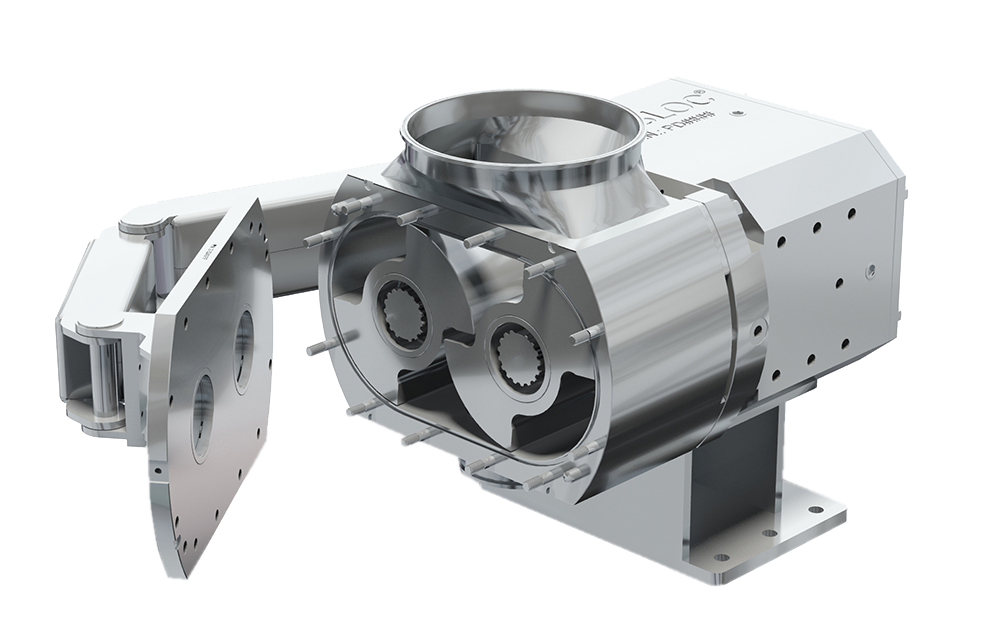
At Process & Power, we proudly supply Unibloc Positive Displacement Pumps, engineered for precision, reliability, and hygienic performance. As part of Unibloc Hygienic Technologies, these pumps are designed to meet the strict standards of food, beverage, dairy, pharmaceutical, and personal care industries—while also delivering exceptional durability for demanding industrial environments.
Product Highlights
Rotary Lobe Pumps – Gentle, efficient pumping for thick, shear-sensitive, or particulate-containing products.
Circumferential Piston Pumps – High-pressure, sanitary solutions ideal for viscous and high-solids applications.
Gear Pumps – Accurate, pulse-free flow for metering, dosing, and process transfer.
Sanitary Designs – FDA-compliant, 3-A and EHEDG ready, with polished surfaces for hygienic processing.
Quick-Strip Construction – Tool-free disassembly that simplifies cleaning, inspection, and maintenance.
Why Choose Unibloc Positive Displacement Pumps?
Industry-leading hygienic designs for food, beverage, dairy, and pharma
Reliable, high-efficiency pumping for both sanitary and industrial duties
Easy-to-clean construction reduces downtime and enhances product safety
Backed by Unibloc’s decades-long reputation for precision engineering
👉 Contact Process & Power for Unibloc Positive Displacement Pumps
📍 1721 Corporate Avenue • Memphis, TN 38132
📞 (901) 362-5500
Contact Us
Unibloc Positive Displacement Pumps FAQ
What Unibloc equipment does this page cover?
This page covers hygienic positive displacement pumping, including the rotary-lobe and circumferential-piston applications shown in the product section.
How does this equipment differ from the Unibloc AODD page?
This page concerns rotary positive displacement designs, while the other page covers air-operated diaphragm equipment. Their drives, pumping elements, and maintenance needs differ.
When should a circumferential piston pump be considered?
It may suit appropriate viscous-product and sanitary transfer duties. Compare flow, pressure, product sensitivity, and cleaning needs with alternative designs.
What is the purpose of a Quick-Strip arrangement?
Where included, it simplifies access for cleaning and inspection. Confirm the disassembly procedure and which parts of the quoted configuration use this feature.
Can a hygienic pump handle both thin and thick products?
A suitable selection may cover a range, but internal slip and inlet filling change with viscosity. Evaluate the minimum and maximum product conditions.
Does a pump's sanitary designation cover the whole process line?
No. Piping, valves, connections, and cleaning procedures also affect hygienic performance. Review the complete installation against the process's requirements.
How do I select a pump for a sensitive product?
Provide viscosity, particle characteristics, temperature, flow, pressure, and acceptable product changes. Pump speed and inlet conditions matter alongside the pumping principle.
Does stainless steel construction automatically make a pump hygienic?
No. Surface finish, seals, drainability, cleanability, and installation details also matter. Confirm the documentation and cleaning requirements for the exact configuration.
Can this pump be cleaned in place?
That depends on the model and installation. Confirm required cleaning flow, temperature, chemistry, and valve arrangements, then validate the cleaning procedure for the process.
Can one pump handle both product and cleaning cycles?
Possibly, but both duties must be checked. Product viscosity and cleaning-liquid flow can require different speeds, pressures, and operating limits.
What can cause product leakage around a seal?
Wear, incompatible elastomers, dry running, unsuitable seal support, or shaft movement may contribute. Investigate repeated failures instead of replacing the seal without reviewing conditions.
Why is product texture changing during transfer?
Excessive speed, restrictions, temperature changes, recirculation, or poor inlet conditions may affect the product. Compare samples and operating data before deciding which adjustment is needed.
What maintenance should hygienic pumps receive?
Follow the model's inspection schedule for seals, product-contact parts, bearings, and clearances. Include cleaning verification and checks for surfaces or components that could retain product.
Can a hygienic pump be rebuilt?
Evaluate mechanical condition and the ability to restore the required product-contact finish and clearances. Confirm replacement-part traceability and revalidate cleaning where the repair affects the process.
How can I get local support for Unibloc Positive Displacement Pumps?
Contact Process & Power at (901) 362-5500 with your location, equipment identification, and application or service concern. The team can review selection, parts, and service options for your needs.
What should I send when requesting a quote?
Include the required duty, fluid or process details, operating conditions, utilities, and installation dimensions. For existing equipment, add nameplate photos, model and serial numbers, and a description of the problem or planned change.