
Bredel Peristaltic Hose Pumps
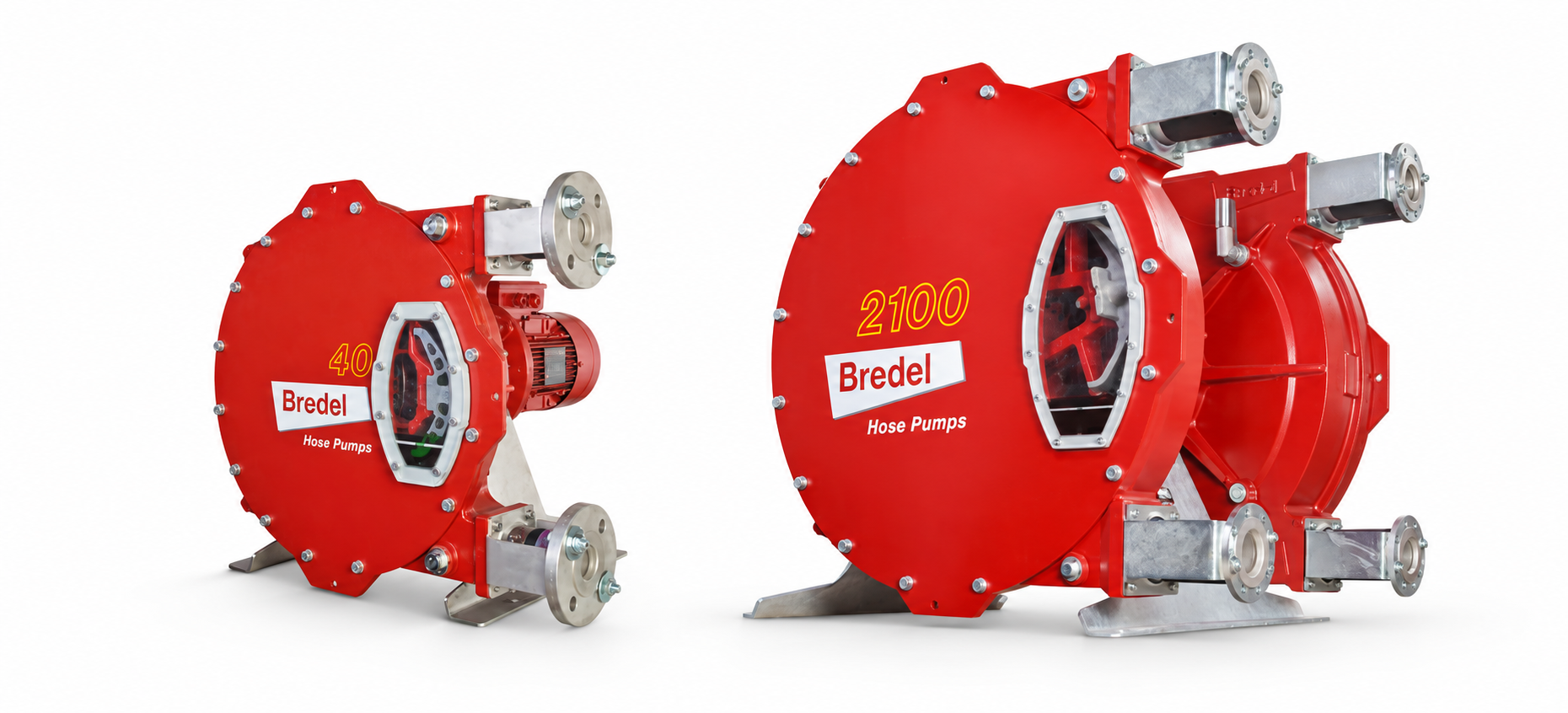
At Process & Power, we offer Bredel peristaltic hose pumps for demanding fluid-transfer, dosing and metering applications involving abrasive, corrosive, viscous or solids-laden materials.
Bredel pumps contain the fluid entirely within a reinforced hose. No valves, mechanical seals or moving pump components contact the pumped material. This simple operating principle helps Bredel pumps handle fluids that can cause rapid wear, clogging or seal failure in other pump designs.
How Bredel Hose Pumps Work
Rotating shoes compress a reinforced hose inside the pump housing. As the hose returns to its original shape, it creates suction that draws more fluid into the pump. The next rotation pushes the trapped fluid toward the discharge.
Because the fluid stays inside the hose, the hose is the pump’s primary wear component. Routine maintenance generally centers on inspecting and replacing this hose rather than rebuilding a complicated wet end.
Bredel Hose Pump Series
The Bredel hose pump series is designed for heavy-duty applications involving abrasive slurries, corrosive chemicals, viscous materials, sludge and fluids containing large solids.
Available models cover a broad range of flow requirements. Larger Bredel pumps can provide high-volume transfer while maintaining the containment and dry-running capabilities of peristaltic technology.
APEX Hose Pumps
APEX hose pumps are designed for low- to medium-pressure dosing, metering and transfer applications. Their higher flow per revolution allows the pump to operate at a lower speed in many applications, helping reduce hose wear and operating costs.
APEX pumps are frequently considered for abrasive slurries, aggressive chemicals and applications in which simple maintenance is a priority.
Bredel CIP Hose Pumps
Bredel CIP pumps are designed for hygienic processes that require regular clean-in-place cycles. Retractable shoes remove compression from the hose during cleaning, allowing the hose to open for more effective CIP flow.
This design can improve cleanability while helping reduce cleaning time, energy consumption and unnecessary hose compression.
Bredel DuCoNite and Heavy Duty Pumps
Bredel DuCoNite pumps use a corrosion-resistant, paint-free electroplated housing for harsh environments. Bredel Heavy Duty configurations provide additional safety and reliability for demanding operating conditions.
The appropriate configuration depends on the fluid, surrounding environment, process risk and maintenance requirements.
Why Choose Bredel Hose Pumps?
No valves or mechanical seals in the fluid path
Fluid completely contained within the hose
Suitable for abrasive and corrosive materials
Handles viscous fluids and suspended solids
Self-priming operation
Strong suction-lift capability
Can run dry without pump damage
Reversible flow
Accurate dosing and metering
Simplified maintenance
No sealing-water flush system
Reduced risk of clogging and leakage
Contact Process & Power for Bredel Hose Pumps
Process & Power can help select a Bredel hose pump based on your flow, pressure, solids content, viscosity, suction conditions, chemical compatibility and operating environment.
Located at: 1721 Corporate Avenue • Memphis, TN 38132
Call us at: (901) 362-5500
Bredel Peristaltic Hose Pumps FAQ
How does a Bredel hose pump work?
Rotating shoes compress a reinforced hose to move liquid. The pumped material stays inside the hose, separating it from the pumping mechanism.
What fluids are Bredel pumps considered for?
Applications can include abrasive slurries, viscous materials, sludge, and compatible chemicals. Select the hose and model around the actual fluid and operating duty.
How does the APEX range differ?
APEX is presented for suitable dosing and transfer duties at low to medium pressures. Compare the required flow, pressure, and service conditions with model-specific data.
What is a Bredel CIP configuration?
The featured CIP design can release hose compression for cleaning flow. Confirm the specific cleaning arrangement and validate its effectiveness for the product.
What is the purpose of a DuCoNite housing?
It provides a corrosion-resistant external housing option for demanding environments. Housing protection and fluid-contact hose compatibility are separate selection considerations.
Can Bredel hose pumps run dry or self-prime?
These are capabilities associated with the technology, but operating conditions and duration still need to follow the selected model's instructions. Review suction lift and fluid behavior during selection.
How does fluid compatibility affect hose selection?
The hose must suit the chemical, concentration, temperature, and operating duty. Review cleaning fluids and potential contamination as well as the normal pumped product.
What can shorten hose life?
High speed, excessive pressure, unsuitable compression, chemical attack, and installation errors can contribute. Compare actual conditions and lubricant requirements with the model's instructions.
Why is my hose pump delivering less flow?
A worn hose, restricted suction, changed viscosity, or inadequate hose recovery may reduce delivery. Check measured flow against speed and operating conditions.
Does a hose pump produce pulsation?
Yes, the hose-compression cycle produces flow variation. Review whether the process needs pulsation damping and select associated equipment for the liquid and operating pressure.
What should happen if a hose fails?
Follow the site's isolation and containment procedures. Inspect the housing and associated components, clean as required, and identify the cause before installing a replacement hose.
How should a hose-pump maintenance interval be set?
Use the manufacturer's guidance and track actual hose life under your conditions. Planned replacement should consider production consequences as well as visible wear or performance changes.
Can pump speed be used to control flow?
Within the model's operating limits, speed provides a practical means of adjusting delivery. Verify output under actual duty because hose condition and suction behavior also affect flow.
What should be checked before changing the pumped product?
Review hose compatibility, lubricant requirements, cleaning, pressure, and viscosity. The new fluid may need a different hose, speed, or operating arrangement.
How can I get local support for Bredel Peristaltic Hose Pumps?
Contact Process & Power at (901) 362-5500 with your location, equipment identification, and application or service concern. The team can review selection, parts, and service options for your needs.
What should I send when requesting a quote?
Include the required duty, fluid or process details, operating conditions, utilities, and installation dimensions. For existing equipment, add nameplate photos, model and serial numbers, and a description of the problem or planned change.