
Watson-Marlow Qdos Metering Pumps
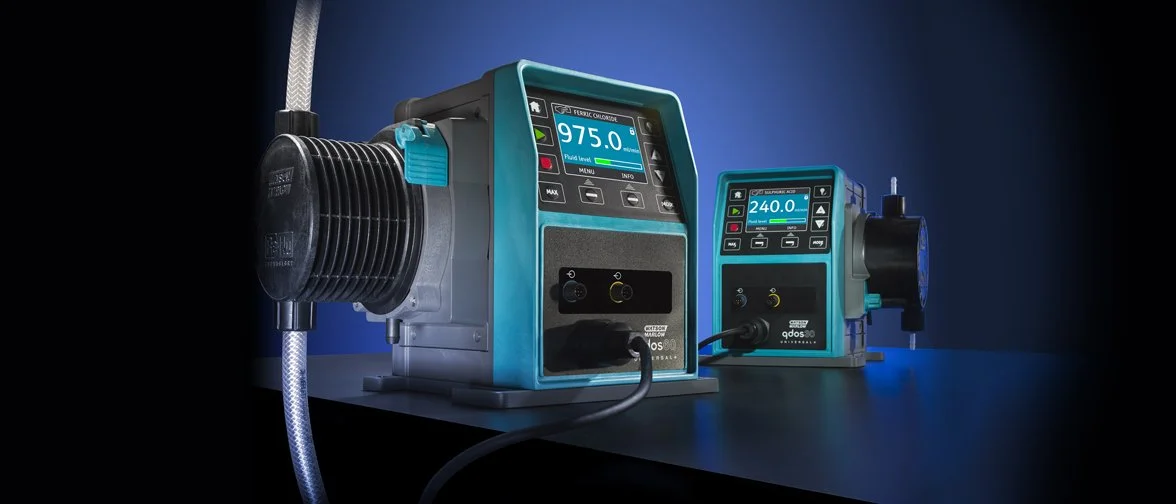
At Process & Power, we offer Watson-Marlow Qdos chemical metering pumps for applications that require accurate, repeatable and dependable chemical dosing.
Qdos pumps use peristaltic technology to meter chemicals without the valves, diaphragms or mechanical seals found in many conventional dosing pumps. The chemical remains contained within the pumphead fluid path, helping reduce maintenance requirements, chemical leakage and operator exposure.
Qdos pumps can be used for continuous or intermittent dosing in water treatment, wastewater treatment, chemical processing, food and beverage production, mining and other industrial applications.
Accurate Chemical Metering
A Qdos pump moves a controlled amount of chemical with each rotation of the pumphead. This positive-displacement design provides predictable flow and helps maintain dosing accuracy as process conditions change.
Qdos pumps can help facilities:
Maintain consistent chemical dosing
Reduce overdosing and chemical waste
Improve process control
Simplify calibration
Reduce maintenance time
Minimize the risk of chemical leaks
Eliminate many conventional pump accessories
Qdos Chemical Metering Pumps
The standard Qdos range is designed for low- to medium-flow chemical metering applications. Different pumps and pumpheads are available to accommodate varying flow, pressure and chemical-compatibility requirements.
Qdos pumps are commonly used for:
Chlorination and disinfection
pH adjustment
Coagulant and flocculant dosing
Sodium hypochlorite dosing
Acid and caustic addition
Polymer dosing
Nutrient dosing
Process chemical injection
Cleaning chemical addition
Qdos H-FLO Metering Pumps
Qdos H-FLO extends Watson-Marlow’s Qdos technology into higher-flow chemical metering applications. It provides the same basic advantages of peristaltic chemical containment while supporting applications that require considerably more chemical volume.
Qdos H-FLO may be considered when a process needs:
Higher chemical feed rates
Accurate flow control
Reduced ancillary equipment
Fast pumphead maintenance
Secure chemical containment
Integration with plant control systems
ReNu Pumphead Technology
The replaceable pumphead is the primary fluid-contact component in a Qdos pump. This design allows maintenance personnel to replace the fluid-contact portion without dismantling valves, diaphragms or complicated wet-end assemblies.
Pumphead selection depends on the chemical, concentration, temperature, operating pressure and required flow rate. Process & Power can help verify chemical compatibility and identify the appropriate Qdos pump and pumphead for the application.
Why Choose Qdos Metering Pumps?
Accurate and repeatable chemical metering
Peristaltic operation without conventional valves
No mechanical seals in the fluid path
Reduced risk of clogging and vapor locking
Simplified installation
Quick pumphead replacement
Reduced maintenance requirements
Lower potential for chemical leakage
Flow control for continuous or intermittent dosing
Models available for different flow and pressure requirements
Contact Process & Power for Qdos Metering Pumps
Process & Power can help you select a Qdos chemical metering pump based on your required flow, discharge pressure, chemical concentration, temperature, control requirements and operating environment.
Located at: 1721 Corporate Avenue • Memphis, TN 38132
Call us at: (901) 362-5500
Watson-Marlow Qdos Metering Pumps FAQ
What is a Watson-Marlow Qdos pump?
Qdos is a peristaltic chemical-metering range designed for controlled dosing. Select the pump and fluid-contact components for the required chemical and operating conditions.
How does Qdos contain the chemical?
The chemical travels through the pumphead fluid path. Its peristaltic operation avoids conventional liquid-side check valves and mechanical shaft seals in that path.
How does Qdos H-FLO differ from the standard range?
H-FLO addresses higher-flow dosing duties. Compare the required flow, pressure, pumphead compatibility, and control configuration when choosing between ranges.
What is ReNu pumphead technology?
It provides a replaceable fluid-contact pumphead for suitable Qdos models. Confirm the correct pumphead for the pump, chemical, and operating duty.
Can Qdos pumps meter sodium hypochlorite?
A compatible configuration can be evaluated for this duty. Provide concentration, temperature, pressure, and suction conditions to confirm the correct selection.
Can Qdos replace a diaphragm metering pump?
Possibly. Compare output range, backpressure, chemical compatibility, controls, and the existing installation before selecting a replacement.
How do I size a chemical metering pump?
Specify minimum and maximum dosing flow, discharge pressure, chemical concentration, temperature, and control method. Review the usable operating range rather than sizing only for maximum output.
Why should actual dosing output be checked?
Delivered flow can change with installation and wear. Verify output by the manufacturer's procedure under representative pressure and suction conditions, especially after maintenance or process changes.
Why is the dosing rate lower than expected?
An empty source, suction restrictions, entrained gas, worn fluid-contact parts, or changed backpressure can contribute. Compare the displayed setting with an independent output measurement.
Can the pump dose more than one chemical?
Review compatibility of the complete fluid path and prevent incompatible chemicals from mixing. A pump suitable for one concentration or temperature may not suit another.
Why do suction conditions matter in metering applications?
The pump must refill reliably between displacement cycles. Long or restrictive suction lines, viscous chemicals, and gas release can interfere with consistent delivery.
What controls should be considered for automated dosing?
Identify the required start/stop, speed or flow signal, feedback, and alarm functions. Confirm the exact pump variant and interfaces before specifying integration.
How often should metering equipment be inspected?
Follow the pump's schedule and monitor dosing accuracy, containment, tubing, connections, and alarms. Chemical duty and runtime determine which components need closer attention.
What should be reviewed after a pumphead or fluid-path change?
Confirm part compatibility, connections, priming, and measured output before returning to normal duty. Update maintenance records and verify the relevant alarms and control settings.
How can I get local support for Watson-Marlow Qdos Metering Pumps?
Contact Process & Power at (901) 362-5500 with your location, equipment identification, and application or service concern. The team can review selection, parts, and service options for your needs.
What should I send when requesting a quote?
Include the required duty, fluid or process details, operating conditions, utilities, and installation dimensions. For existing equipment, add nameplate photos, model and serial numbers, and a description of the problem or planned change.